Why Does Frost Dream of Being a Swinger of Birches Again
Andrew has a keen interest in all aspects of verse and writes extensively on the bailiwick. His poems are published online and in print.
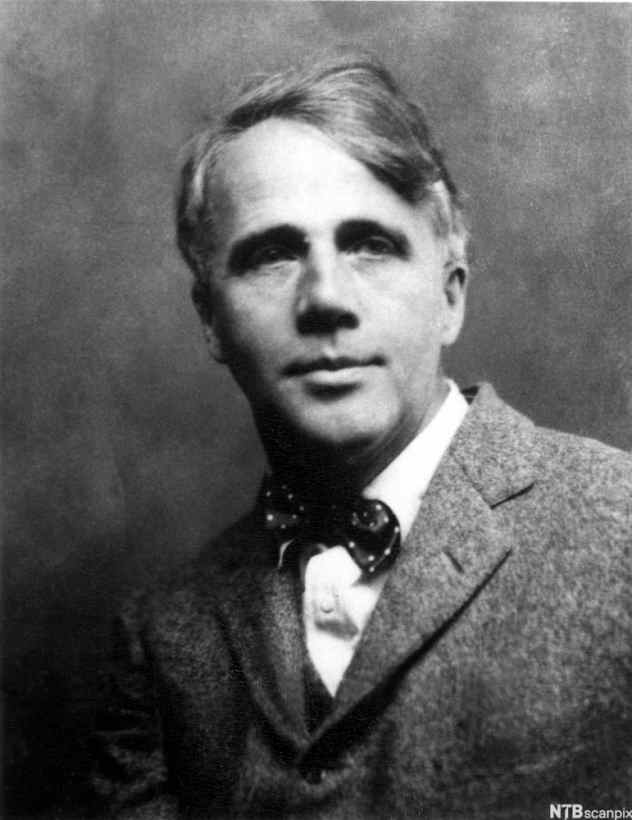
Robert Frost
Robert Frost And A Summary of Birches
Birches is a verse form that takes you into the woods and nearly up to heaven. It is ane of the near popular of Frost'due south blank verse creations and was first published in 1916 in his book Mountain Interval.
In the words of the poet himself, Birches is '2 fragments soldered together', that is, he first intended the poem to accept ii definite angles - one concentrating on the ice-storm bending birch branches, the other detailing the boy swinging on them.
This is why Frost initially had the title of Swinging Birches, because he preferred the rhythm of the present participle (as in his other poems such as Mending Wall and Later on Apple tree Picking for example) to help kickstart his verse form.
Frost decided to stick to a unmarried, simple title and, as information technology stands, Birches became one long exploration of the speaker's relationship to the Truth, split into 3 aspects:
- naturalistic (the ice-storm'southward effect on the birch trees),
- personal (the boy 'conquering' the trees),
- philosophical (the balance betwixt reality and idealism).
Although the bulk of the poem is written in iambic pentameter, there are considerable movements away from the steady rhythm in certain lines, which nosotros'll explore later on line by line in the analysis.
Birches develops a subtle tension equally a result of this deviation alongside meaning, the reader never really knowing if the tree branches will intermission and crash, due to natural causes, or if the boy's swinging on them is pure fantasy or not.
The poet tests the reader again and again, typical Frost, living up to his famous quote that poetry 'plays perilously between truth and make believe.'
In some respects the poem is an extended metaphor, the birch trees representing creative life itself, their flexibility the frail support each person needs to strike a balance and to overcome what can be a precarious man existence. Come back downward to reality the speaker implies, but enjoy odd moments of liberty.
Real life can be hard, and so why not escape into idealism, transcend the mundane, swing a little? Frost chose the former, being a pragmatist, clinging to the finite, occasionally swinging only not too close to heaven.
Birches
When I see birches curve to left and right
Beyond the lines of straighter darker copse,
I like to remember some boy's been swinging them.
But swinging doesn't bend them down to stay
As ice-storms practise. Often you must have seen them
Loaded with ice a sunny winter morning
After a pelting. They click upon themselves
Every bit the cakewalk rises, and plow many-colored
As the stir cracks and crazes their enamel.
Shortly the dominicus's warmth makes them shed crystal shells
Shattering and avalanching on the snow-crust—
Such heaps of cleaved glass to sweep away
You'd call up the inner dome of heaven had fallen.
They are dragged to the withered bracken by the load,
And they seem not to break; though once they are bowed
So low for long, they never right themselves:
You may see their trunks arching in the forest
Years afterwards, trailing their leaves on the basis
Similar girls on hands and knees that throw their hair
Before them over their heads to dry out in the sun.
But I was going to say when Truth broke in
With all her thing-of-fact about the ice-storm
I should adopt to have some boy bend them
As he went out and in to fetch the cows—
Some male child as well far from town to larn baseball,
Whose only play was what he institute himself,
Summer or wintertime, and could play lonely.
One past one he subdued his male parent's copse
By riding them down over and over once again
Until he took the stiffness out of them,
And not one but hung limp, not 1 was left
For him to conquer. He learned all at that place was
To acquire near not launching out too soon
And so not carrying the tree away
Clear to the ground. He always kept his poise
To the peak branches, climbing advisedly
With the aforementioned pains you use to fill up a loving cup
Up to the brim, and fifty-fifty higher up the brim.
Then he flung outward, feet first, with a swish,
Kicking his way down through the air to the ground.
So was I in one case myself a swinger of birches.
And then I dream of going dorsum to exist.
It's when I'm weary of considerations,
And life is too much similar a pathless forest
Where your face up burns and tickles with the cobwebs
Cleaved across it, and one eye is weeping
From a twig's having lashed across it open.
I'd like to get away from earth awhile
And so come back to it and begin over.
May no fate willfully misunderstand me
And half grant what I wish and snatch me away
Not to return. Earth'south the right identify for love:
I don't know where it'due south likely to go better.
I'd similar to go by climbing a birch tree,
And climb blackness branches up a snow-white trunk
Toward heaven, till the tree could bear no more,
Simply dipped its summit and set me down again.
That would be skilful both going and coming dorsum.
1 could do worse than be a swinger of birches.
Summary And Theme Of Birches
Birches explores the idea of human being existence and the limits we can go to as creative, loving beings.
By choosing the tree as a vehicle for potential transcendence, as a means of leaving the earth temporarily, Robert Frost has tapped into the mythological and biblical repositories, where the tree is both life giver and life threatener.
Having been a farmer himself, he will have known of this tree's qualities close upward, the birch (Betula populifolia) being a pioneer of soil, of limited longevity and having a feminine appearance. When a sapling, the birch is bendy and pliable.
Curlicue to Continue
Read More From Owlcation
Birches has four distinct sections:
- starting in the present - When I encounter (line 1)
- moving on into the past - Often you lot must have seen (line 5)
- before revisiting the present - And and then I dream (line 42)
- and catastrophe with hereafter wishes - I'd like to go away (line 48)
Within the diverse areas of action the speaker takes the reader on a journeying of sorts, starting with the ubiquitous birches confronting the darker direct copse and moving on through the process of swinging, which involves ice-storms, a lone male child and lots of wishful thinking.
There are some brilliant descriptive passages as the ice-storm hits the copse and weighs them downwardly (7 - 20). This is Nature at piece of work, making the birches bow their heads to bear on the world in a rather beautiful fashion.
This is first form imagery and is equalled with the manner in which the boy bends the birches (35 - 40), the climb upwards analagous with that of a cup existence filled to the very rim, the thrill of apprehension filling the air.
The speaker contrasts the Truth of natural furnishings with those of fantasy, of the imagination. Swinging on birches is tantamount to a risky climb up towards heaven and if one isn't careful something might requite.
In Nature it is the Dominicus melting the ice that shatters the hopes of transcendence, a parallel with Shelley's Adonais and the many colored dome of glass, which besides breaks.
With these acute observations, like lessons learned, the speaker moves on and informs the reader that he would much prefer the control of a human - the male child - when it comes to swinging on birches. And then it is that the confession in line 41 reveals a small truth - the speaker was the boy - but he's not quite washed however.
The speaker wants to render to this uncertain world, where heaven and earth might meet, for life sometimes becomes too painful and harsh. Does he wish for a second childhood again? Does he desire to go dorsum to challenging his begetter at a time when he was first becoming aware of the female person sex activity?
Merely, let'south not get him wrong, he doesn't want to tempt Fate and end upwardly, well, dead? Or loveless. He's more than than aware that the plane of Globe is where we larn about the reality of dearest.
In the end at that place is a co-operative solution to this spiritual trouble, to piece of work with Nature, with the facts, that keep a person grounded and maintain a balance between what is wished for and what is already in our lives.
Analysis of Birches - Rhythm, Stress and Scansion
Birches is a single stanza verse form of 59 lines. It is a bare verse poem because it is unrhymed and in iambic pentameter. Each line should have v feet (10 syllables) and follow the classical, steady da-DUM da-Dum da-DUM da-DUM da-DUM beat, but Birches does not.
Frost altered the meter (metre in United kingdom) of certain lines to help reinforce pregnant and to introduce texture and tension for the reader. Some of these departures from the iambic brand it a difficult verse form to browse in parts and critics over the years have come up up with dissimilar interpretations.
Some base their findings on the actual spoken version of the poem by Frost, others go by the book and scan the poem according to convention and what seems right to them.
- This is why there is no definitively perfect scan of certain lines of this verse form. Poets and poetry professors akin tin concur and disagree merely the bottom line is, scansion is something of an art and can't be reduced to fix mathematical formulae.
- For those who are neat on learning well-nigh the meter (metre in Great britain) of this verse form, yous will observe a line by line analysis.
Line By Line Metrical Analysis With Literary Devices
Lines i - 4
The offset iv lines of Birches are iambic pentameter, no uncertainty. The poet sets up the steady foundational beat as he starts to explore, ten syllables per line, five feet (/):
When I / run into bir / ches curve / to left / and right
Beyond the lines of straighter darker copse,
I similar to remember some boy's been swinging them.
But swinging doesn't bend them downwardly to stay
Note the heavy assuming stressed syllables and normal unstressed. Unproblematic, single syllable words are dominant in these opening lines.
- In the following assay, lines of pure iambic pentameter are shown in normal type, as are lines 2,iii and iv above. Lines with metrical variants are marked.
Lines 5 - nine
Enjambment (carrying on a line without punctuation) leads the states onto line five; indeed enjambment takes the reader on to line 9, the ice-storm coming into focus as syntax changes and the line rhythms alter:
As ice- / storms do. / Often / you must / have seen them
Loaded / with ice / a sun / ny wint / er morning timeing
After / a rain. / They click / upon / themselves
As the / breeze ri / ses, and / turn man / y-colored
As the / stir cracks / and cra / zes their / enamel.
As is obvious, pure iambic pentameter has suddenly departed! There are variations on a theme of altered rhythm with these v fascinating lines, four of which have 11 syllables, the same iv catastrophe with an unstressed (feminine) syllable. So, trochees and spondees are prevalent, as are pyrrhics and amphibrachs. These combine in a diversity of ways to echo the ice-storms ascent and fall.
The enjambment meanwhile urges the reader to go along straight on line to line, with little suspension, which tin sometimes alter the fashion opening words are stressed.
- Some critics and poets offer different scans for certain of these lines. One aspect that isn't in dispute is the apply of hard alliteration in line 9, with cracks and crazes.
Lines 10 - thirteen
Subtle ingemination, in contrast to the preceding line, adds sibilance and mystery to line 10, and the reader is invited to concur with the speaker as the ice crystals fall and reality is shattered:
Shortly the / dominicus's warmth / makes them / shed cry / stal shells
Shattering and avalanching on the snow-chaff—
Such heaps of cleaved drinking glass to sweep away
You'd remember / the in / ner dome / of heaven / had fallen.
Note the use of onomatopoeia in shattering and the four syllable avalanching, quite dramatic use of the present participle. Again, the iambic pentameter is broken (except in line 12), with trochee and spondee. Line thirteen is sometimes treated as a twelve syllable line merely in this example heaven is taken to be a single syllable, not two.
More than Analysis of Frost's Birches
Lines 14 - 20
In that location is a hint of rhyme in the post-obit two lines (load/bowed) but this is more than accident than design because this is bare verse and at that place are not supposed to be terminate rhymes, strictly speaking. Enjambment is used, allowing for sense to run on into the next line with no punctuation:
They are dragged / to the with / ered brack / en by / the load,
And they seem non to pause; though once they are bowed
So depression for long, they never correct themselves:
You may / see their / trunks arch / ing in / the woods
Years later on / wards, trail / ing their / leaves on / the ground
Like girls on hands and knees that throw their hair
Before / them o / ver their heads / to dry / in the sun.
A mix of meters here: two lines nowadays iambic pentameter, the rest are mixed. Line 14 is particularly stretched out with those opening anapaests reinforcing the assonance of dragged/bracken. The spondee in line 18 prolongs the time scale somewhat and the simile that follows creates a wonderful feminine prototype.
All in all this section is total of prepositions, notation: to the, by the, in the, on the - signifying the stop of the ice-storm and an attempt to get back on rail with the real narrative.
Farther Analysis of Birches
Lines 21 - 27
The speaker returns to the idea of the boy swinging on the birches, from line 3, instead of the ice-storm. This department maintains the steady iambic undertones but peppers the lines with trochees now and then (inverted iambs), whilst anapaests occasionally intervene:
But I / was go / ing to say / when Truth / broke in
With all / her mat / ter-of-fact / about / the ice-tempest
I should / prefer / to accept / some boy / curve them
As he went out and in to fetch the cows—
Some boy too far from town to learn / basebrawl,
Whose but play was what he found himself,
Summer / or win / ter, and / could play / aalone.
Annotation the alliteration here and there and the emphasis on x syllable lines (23-27), suggesting that this is almost a return to the speaker's thought of normality.
Birches Analysis
Lines 28 - 40
The next eleven lines concentrate on the boy's actions and once again are full of variations on a theme of iambic. Two of the lines are pure iambic pentameter, the rest reveal trochees, spondees, pyrrhics and anapaest, slowing downward then speeding upwards proceedings, reflecting the action of the lone boy:
One past / one he / subdued / his fa / ther's trees
By rid / ing them downwards / over / and o / ver again
Until he took the stiffness out of them,
And not / one only / hung limp, / not one / was left
For him / to con / quer. He / learned all / there was
To larn about not launching out too soon
And so / non machine / ry ing / the tree / away
Clear to / the footing. / He al / ways kept / his poise
To the / peak branch / es, climb / ing care / fully
With the / aforementioned pains / y'all use / to fill / a cup
Upward to / the brim, / and due east / ven a bove / the skirt.
Then he / flung out / ward, feet / first, with / a swish,
Kicking / his way / down through / the air / to the ground.
Notation the subtle use of internal consonance :
them/them/limp/him/climbing/brim/brim.
And alliteration, again, pops up in several lines. For instance: climbing care/feet first.
Assay of Birches
Lines 41 - 53
The speaker declares himself a swinger of birches; he could exist the boy. Metrically some of these lines are far from the iambic foundation, with pyrrhics and amphibrachs - just like the speaker who wants to get away from earth, the rhythm changes - but non besides much. The boy still needs to stay grounded:
So was / I in one case / mycocky / a swinger / of birches.
And so I dream of going dorsum to be.
Information technology's when / I'grand wea / ry of / consid / due eastrations,
And life is too much like a pathless wood
Where your / face burns / and tick / les with / the cobwebs
Broken / across / information technology, and / one eye / is crying
From a / twig'southward hav / ing lashed / acantankerous / it open.
I'd like to get abroad from world awhile
And then / come dorsum / to information technology / and begin / over.
May no / fate volition / fully mis / understand me
And half grant / what I wish / and snatch / me away
Not to / replough. / Earth's the / right identify / for honey:
I don't / know where / it's like /ly to go / better.
Line Past Line Analysis of Birches
Lines 54 - 59
The remaining lines ostend the speaker's desire. He'd similar to climb a birch and experience that sensation again, of going up towards heaven and falling back to the world.
I'd like / to go / past climb / ing a / birch tree,
And climb / blackness bran / ches up / a snow- / white body
Toward heaven, till the tree could bear no more,
Just dipped its top and gear up me downward once more.
That would / be skilful / both go / ing and com / ing back.
One could / do worse / than exist / a swinger / of birches.
At that place are some ambiguities along the way. For instance, how to pronounce Toward - is information technology a unmarried syllable or two? If information technology is pronounced T'ward then the line becomes pure iambic pentameter; if Toward then the remaining feet get trochees, which wouldn't piece of work. So the former, T'ward, fits best.
All in all, complex rhythms show up in a traditional iambic framework, reflecting the unusual perspective Frost had on the everyday things he encountered. There is music and texture, repetition but non monotony, and the clever use of alliteration and internal rhyme brand this a verse form for speaking out loud. But not as well loud.
Sources
Norton Anthology, Norton, 2005
www.poetryfoundation.org
world wide web.poets.org
The Manus of the Poet, Rizzoli, 1997
© 2022 Andrew Spacey
Source: https://owlcation.com/humanities/Analysis-Of-Poem-Birches-by-Robert-Frost
0 Response to "Why Does Frost Dream of Being a Swinger of Birches Again"
Post a Comment