what did avery macleod and mccarty contribute to this line of investigation
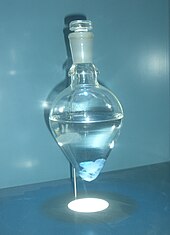
Hyder, Avery, MacLeod and McCarty used strands of purified Dna such as this, precipitated from solutions of cell components, to perform bacterial transformations
The Avery–MacLeod–McCarty experiment was an experimental demonstration, reported in 1944 by Oswald Avery, Colin MacLeod, and Maclyn McCarty, that Dna is the substance that causes bacterial transformation, in an era when it had been widely believed that information technology was proteins that served the role of carrying genetic data (with the very discussion protein itself coined to betoken a belief that its function was principal). It was the culmination of enquiry in the 1930s and early 20th century at the Rockefeller Institute for Medical Inquiry to purify and characterize the "transforming principle" responsible for the transformation phenomenon showtime described in Griffith'south experiment of 1928: killed Streptococcus pneumoniae of the virulent strain blazon III-S, when injected forth with living just non-virulent type Two-R pneumococci, resulted in a mortiferous infection of type III-S pneumococci. In their paper "Studies on the Chemical Nature of the Substance Inducing Transformation of Pneumococcal Types: Induction of Transformation by a Desoxyribonucleic Acid Fraction Isolated from Pneumococcus Type III", published in the February 1944 issue of the Journal of Experimental Medicine, Avery and his colleagues propose that Deoxyribonucleic acid, rather than poly peptide every bit widely believed at the time, may be the hereditary textile of bacteria, and could be coordinating to genes and/or viruses in higher organisms.[i] [ii]

Avery and his colleagues showed that DNA was the key component of Griffith's experiment, in which mice are injected with dead bacteria of one strain and alive bacteria of another, and develop an infection of the dead strain'south type.
With the evolution of serological typing, medical researchers were able to sort bacteria into different strains, or types. When a person or exam creature (e.m., a mouse) is inoculated with a particular blazon, an immune response ensues, generating antibodies that react specifically with antigens on the bacteria. Blood serum containing the antibodies can then exist extracted and applied to cultured bacteria. The antibodies will react with other leaner of the aforementioned type as the original inoculation. Fred Neufeld, a German language bacteriologist, had discovered the pneumococcal types and serological typing; until Frederick Griffith's studies bacteriologists believed that the types were fixed and unchangeable from 1 generation to the next.[iii]
Griffith's experiment, reported in 1928,[four] identified that some "transforming principle" in pneumococcal bacteria could transform them from one type to another. Griffith, a British medical officeholder, had spent years applying serological typing to cases of pneumonia, a frequently fatal illness in the early 20th century. He establish that multiple types—some virulent and some non-virulent—were oft present over the course of a clinical case of pneumonia, and idea that one blazon might change into another (rather than simply multiple types beingness present all along). In testing that possibility, he found that transformation could occur when dead leaner of a virulent blazon and live bacteria of a non-virulent type were both injected in mice: the mice would develop a fatal infection (commonly only caused by live bacteria of the virulent type) and die, and virulent bacteria could be isolated from such infected mice.[5]
The findings of Griffith's experiment were soon confirmed, beginning by Fred Neufeld[6] at the Koch Institute and past Martin Henry Dawson at the Rockefeller Institute.[vii] A series of Rockefeller Institute researchers continued to study transformation in the years that followed. With Richard H.P. Sia, Dawson developed a method of transforming bacteria in vitro (rather than in vivo equally Griffith had washed).[8] After Dawson'due south deviation in 1930, James Alloway took up the endeavor to extend Griffith'south findings, resulting in the extraction of aqueous solutions of the transforming principle past 1933. Colin MacLeod worked to purify such solutions from 1934 to 1937, and the work was continued in 1940 and completed by Maclyn McCarty.[9] [10]
Experimental piece of work [edit]
Pneumococcus is characterized by smoothen colonies which have a polysaccharide capsule that induces antibiotic formation; the different types are classified according to their immunological specificity.[1]
The purification procedure Avery undertook consisted of first killing the leaner with rut and extracting the saline-soluble components. Side by side, the poly peptide was precipitated out using chloroform and the polysaccharide capsules were hydrolyzed with an enzyme. An immunological precipitation acquired past type-specific antibodies was used to verify the complete destruction of the capsules. Then, the active portion was precipitated out by alcohol fractionation, resulting in fibrous strands that could be removed with a stirring rod.[ane]
Chemical analysis showed that the proportions of carbon, hydrogen, nitrogen, and phosphorus in this active portion were consequent with the chemical composition of Dna. To show that it was DNA rather than some small amount of RNA, poly peptide, or some other cell component that was responsible for transformation, Avery and his colleagues used a number of biochemical tests. They found that trypsin, chymotrypsin and ribonuclease (enzymes that suspension autonomously proteins or RNA) did not affect information technology, but an enzyme preparation of "deoxyribonucleodepolymerase" (a crude preparation, obtainable from a number of animal sources, that could break down DNA) destroyed the extract'southward transforming ability.[i]
Follow-up work in response to criticism and challenges included the purification and crystallization, by Moses Kunitz in 1948, of a Deoxyribonucleic acid depolymerase (deoxyribonuclease I), and precise work past Rollin Hotchkiss showing that nearly all the detected nitrogen in the purified DNA came from glycine, a breakdown production of the nucleotide base adenine, and that undetected protein contamination was at most 0.02% past Hotchkiss's estimation.[eleven] [12]


The experimental findings of the Avery–MacLeod–McCarty experiment were chop-chop confirmed, and extended to other hereditary characteristics likewise polysaccharide capsules. Still, there was considerable reluctance to have the determination that DNA was the genetic fabric. According to Phoebus Levene's influential "tetranucleotide hypothesis", DNA consisted of repeating units of the four nucleotide bases and had trivial biological specificity. Deoxyribonucleic acid was therefore thought to be the structural component of chromosomes, whereas the genes were idea probable to be made of the protein component of chromosomes.[thirteen] [fourteen] This line of thinking was reinforced past the 1935 crystallization of tobacco mosaic virus by Wendell Stanley,[15] and the parallels amidst viruses, genes, and enzymes; many biologists thought genes might exist a sort of "super-enzyme", and viruses were shown according to Stanley to be proteins and to share the holding of autocatalysis with many enzymes.[16] Furthermore, few biologists thought that genetics could be applied to bacteria, since they lacked chromosomes and sexual reproduction. In item, many of the geneticists known informally as the phage grouping, which would go influential in the new discipline of molecular biology in the 1950s, were dismissive of Deoxyribonucleic acid every bit the genetic material (and were inclined to avoid the "messy" biochemical approaches of Avery and his colleagues). Some biologists, including beau Rockefeller Institute Fellow Alfred Mirsky, challenged Avery's finding that the transforming principle was pure DNA, suggesting that protein contaminants were instead responsible.[13] [14] Although transformation occurred in some kinds of bacteria, it could non be replicated in other leaner (nor in whatsoever higher organisms), and its significance seemed express primarily to medicine.[13] [17]
Scientists looking back on the Avery–MacLeod–McCarty experiment accept disagreed well-nigh just how influential information technology was in the 1940s and early 1950s. Gunther Stent suggested that it was largely ignored, and only celebrated afterwards—similarly to Gregor Mendel'due south work decades before the rise of genetics. Others, such as Joshua Lederberg and Leslie C. Dunn, attest to its early significance and cite the experiment as the beginning of molecular genetics.[18]
A few microbiologists and geneticists had taken an interest in the physical and chemical nature of genes before 1944, merely the Avery–MacLeod–McCarty experiment brought renewed and wider interest in the subject. While the original publication did non mention genetics specifically, Avery as well as many of the geneticists who read the paper were aware of the genetic implications—that Avery may accept isolated the gene itself equally pure DNA. Biochemist Erwin Chargaff, geneticist H. J. Muller and others praised the result as establishing the biological specificity of Dna and as having important implications for genetics if DNA played a similar role in higher organisms. In 1945, the Royal Society awarded Avery the Copley Medal, in part for his work on bacterial transformation.[nineteen]
Between 1944 and 1954, the newspaper was cited at least 239 times (with citations spread evenly through those years), mostly in papers on microbiology, immunochemistry, and biochemistry. In addition to the follow-up work by McCarty and others at the Rockefeller Institute in response to Mirsky's criticisms, the experiment spurred considerable piece of work in microbiology, where it shed new calorie-free on the analogies between bacterial heredity and the genetics of sexually-reproducing organisms.[17] French microbiologist André Boivin claimed to extend Avery's bacterial transformation findings to Escherichia coli,[20] although this could not be confirmed by other researchers.[17] In 1946, however, Joshua Lederberg and Edward Tatum demonstrated bacterial conjugation in E. coli and showed that genetics could apply to bacteria, even if Avery'south specific method of transformation was not general.[21] Avery's work besides motivated Maurice Wilkins to continue X-ray crystallographic studies of DNA, even every bit he faced pressure from funders to focus his research on whole cells, rather than biomolecules.[17]
Despite the meaning number of citations to the paper and positive responses it received in the years following publication, Avery's work was largely neglected by much of the scientific community. Although received positively past many scientists, the experiment did not seriously impact mainstream genetics inquiry, in part considering it fabricated niggling difference for classical genetics experiments in which genes were defined past their behavior in convenance experiments rather than their chemical makeup. H. J. Muller, while interested, was focused more than on physical rather than chemic studies of the gene, as were most of the members of the phage grouping. Avery's work was also neglected by the Nobel Foundation, which later expressed public regret for declining to award Avery a Nobel Prize.[22]
By the time of the 1952 Hershey–Hunt experiment, geneticists were more inclined to consider Deoxyribonucleic acid every bit the genetic material, and Alfred Hershey was an influential member of the phage group.[23] [24] Erwin Chargaff had shown that the base of operations composition of DNA varies past species (reverse to the tetranucleotide hypothesis),[25] and in 1952 Rollin Hotchkiss published his experimental evidence both confirming Chargaff'southward work and demonstrating the absenteeism of protein in Avery's transforming principle.[26] Furthermore, the field of bacterial genetics was quickly becoming established, and biologists were more inclined to think of heredity in the same terms for leaner and college organisms.[23] [24] After Hershey and Chase used radioactive isotopes to testify that it was primarily Deoxyribonucleic acid, rather than protein, that entered bacteria upon infection with bacteriophage,[27] it was soon widely accepted that Dna was the fabric. Despite the much less precise experimental results (they institute a not-insignificant amount of protein entering the cells likewise as DNA), the Hershey–Chase experiment was not subject to the same degree of challenge. Its influence was boosted by the growing network of the phage group and, the following year, by the publicity surrounding the DNA structure proposed by Watson and Crick (Watson was besides a member of the phage group). Just in retrospect, however, did either experiment definitively testify that DNA is the genetic material.[23] [24]
Notes [edit]
- ^ a b c d Avery, Oswald T.; Colin Chiliad. MacLeod; Maclyn McCarty (1944-02-01). "Studies on the Chemic Nature of the Substance Inducing Transformation of Pneumococcal Types: Induction of Transformation past a Deoxyribonucleic Acid Fraction Isolated from Pneumococcus Type 3". Periodical of Experimental Medicine. 79 (2): 137–158. doi:10.1084/jem.79.2.137. PMC2135445. PMID 19871359.
- ^ Fruton (1999), pp. 438–440
- ^ Lehrer, Steven. Explorers of the Body. 2nd edition. iuniverse 2006 p 46 [1]
- ^ Griffith, Frederick (January 1928). "The Significance of Pneumococcal Types". The Journal of Hygiene. 27 (2): 113–159. doi:10.1017/S0022172400031879. JSTOR 4626734. PMC2167760. PMID 20474956.
- ^ Dawes, Heather (August 2004). "The quiet revolution". Electric current Biological science. 14 (fifteen): R605–R607. doi:10.1016/j.cub.2004.07.038. PMID 15296771.
- ^ Neufeld, Fred; Levinthal, Walter (1928). "Beitrage zur Variabilitat der Pneumokokken". Zeitschrift für Immunitätsforschung. 55: 324–340.
- ^ Dawson, Martin H. "The Interconvertibility of 'R' and 'S' Forms of Pneumococcus", Periodical of Experimental Medicine, volume 47, no. 4 (one April 1928): 577–591.
- ^ Dawson, Martin H.; Sia, Richard H. P. (1930). "The Transformation of Pneumococcal Types In Vitro". Proceedings of the Order for Experimental Biology and Medicine. 27 (ix): 989–990. doi:x.3181/00379727-27-5078. S2CID 84395600.
- ^ Fruton (1999), p. 438
- ^ The Oswald T. Avery Collection: "Shifting Focus: Early on Work on Bacterial Transformation, 1928–1940." Profiles in Science. U.S. National Library of Medicine. Accessed Feb 25, 2009.
- ^ Fruton (1999), p. 439
- ^ Witkin EM (August 2005). "Remembering Rollin Hotchkiss (1911–2004)". Genetics. 170 (4): 1443–seven. doi:10.1093/genetics/170.4.1443. PMC1449782. PMID 16144981.
- ^ a b c Morange (1998), pp. xxx–39
- ^ a b Fruton (1999), pp. 440–441
- ^ Stanley, Wendell Thousand. (1935-06-28). "Isolation of a Crystalline Protein Possessing the Backdrop of Tobacco-Mosaic Virus" (PDF). Science. New Series. 81 (2113): 644–645. Bibcode:1935Sci....81..644S. doi:x.1126/science.81.2113.644. JSTOR 1658941. PMID 17743301. Archived from the original (PDF) on September 27, 2006. Retrieved 2009-02-26 .
- ^ On the intersecting theories of viruses, genes and enzymes in this flow, see: Creager, Angela North. H. The Life of a Virus: Tobacco Mosaic Virus as an Experimental Model, 1930–1965. Academy of Chicago Printing: Chicago, 2002. ISBN 0-226-12025-two
- ^ a b c d Deichmann, pp. 220–222
- ^ Deichmann, pp. 207–209
- ^ Deichmann, pp. 215–220
- ^ Boivin; Boivin, André; Vendrely, Roger; Lehoult, Yvonne (1945). "L'acide thymonucléique hautement polymerise, principe capable de conditioner la spécificité sériologique et fifty'équipement enzymatique des Bactéries. Conséquences pour la biochemie de 50'hérédité". Comptes Rendus. 221: 646–648.
- ^ Lederberg, Joshua; Edward 50. Tatum (1946-10-19). "Gene Recombination in Escherichia Coli". Nature. 158 (4016): 558. Bibcode:1946Natur.158..558L. doi:ten.1038/158558a0. PMID 21001945. S2CID 1826960.
- ^ Deichmann, pp. 227–231
- ^ a b c Morange (1998), pp. 44–50
- ^ a b c Fruton (1999), pp. 440–442
- ^ Chargaff East (June 1950). "Chemical specificity of nucleic acids and mechanism of their enzymatic degradation". Experientia. half-dozen (6): 201–nine. doi:10.1007/BF02173653. PMID 15421335. S2CID 2522535.
- ^ Hotchkiss, Roland D. "The role of deoxyribonucleotides in bacterial transformations". In Westward. D. McElroy; B. Drinking glass (eds.). Phosphorus Metabolism. Baltimore: Johns Hopkins University Press. pp. 426–36.
- ^ Hershey AD, Chase One thousand (May 1952). "Independent functions of viral protein and nucleic acid in growth of bacteriophage". The Journal of General Physiology. 36 (1): 39–56. doi:10.1085/jgp.36.1.39. PMC2147348. PMID 12981234.
References [edit]
- Deichmann, UTE (2004). "Early on responses to Avery et al.'s newspaper on Deoxyribonucleic acid as hereditary material". Historical Studies in the Physical and Biological Sciences. 34 (ii): 207–32. doi:10.1525/hsps.2004.34.2.207.
- Fruton, Joseph S. (1999). Proteins, enzymes, genes: the interplay of chemical science and biology. New Oasis, Conn: Yale University Press. ISBN978-0-300-07608-0.
- Cobb, Matthew; Morange, Michel (1998). A history of molecular biology. Cambridge: Harvard University Printing. ISBN978-0-674-00169-v.
- Lehrer, Steven (2006). Explorers of the Torso: Dramatic Breakthroughs in Medicine from Ancient Times to Mod Science. Us: iUniverse. ISBN978-0-595-40731-6.
- Fry, Michael (2016) Landmark Experiments in Molecular Biology; Elsevier-Academic Press, U.s., ISBN 9780128020746
Farther reading [edit]
- Lederberg J (February 1994). "The transformation of genetics by Deoxyribonucleic acid: an anniversary celebration of Avery, MacLeod and McCarty (1944)". Genetics. 136 (two): 423–6. doi:10.1093/genetics/136.two.423. PMC1205797. PMID 8150273.
- McCarty, Maclyn (1986). The transforming principle: discovering that genes are made of Dna. New York: Norton. ISBN978-0-393-30450-3.
- Stegenga, Jacob (2011). "The chemical characterization of the gene: vicissitudes of evidential assessment". History and Philosophy of the Life Sciences. 33 (one): 105–127. PMID 21789957.
External links [edit]
- Profiles in Science: The Oswald T. Avery Collection
Source: https://en.wikipedia.org/wiki/Avery%E2%80%93MacLeod%E2%80%93McCarty_experiment
0 Response to "what did avery macleod and mccarty contribute to this line of investigation"
Post a Comment